
Second-Hand Trauma: When Others’ Pain Starts to Feel Like Your Own
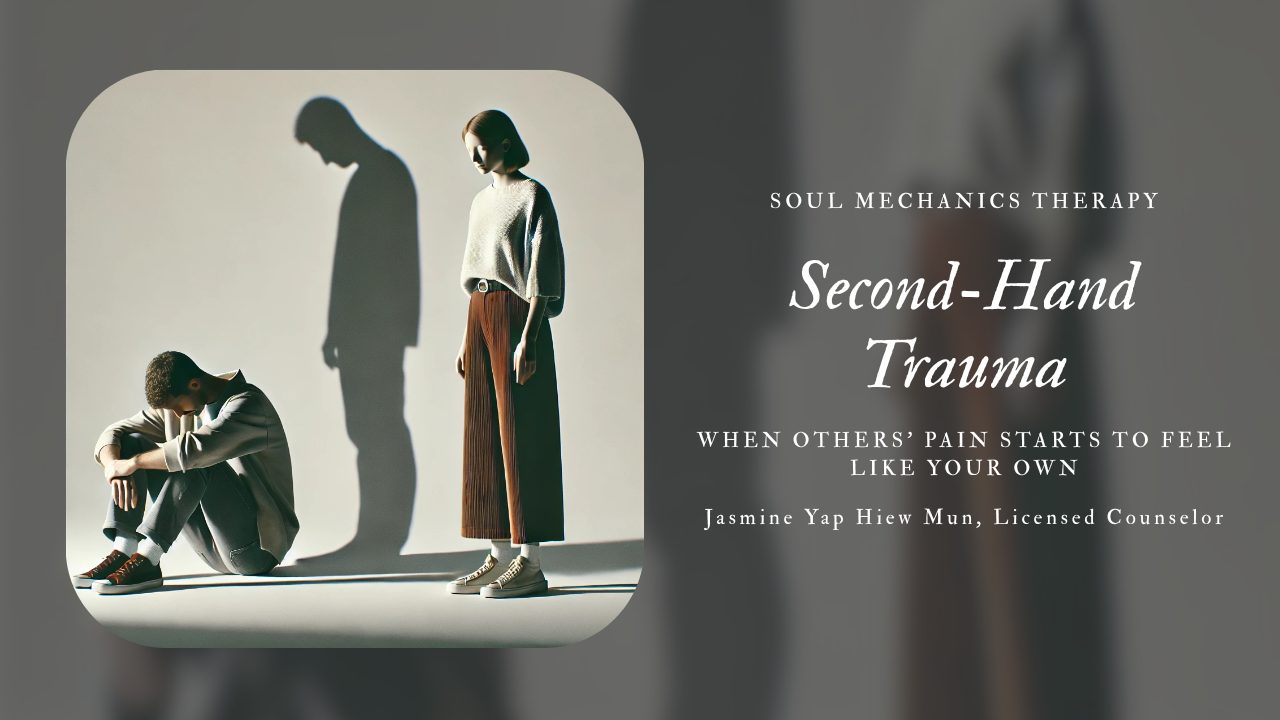
Second-Hand Trauma: When Others’ Pain Starts to Feel Like Your Own

Written By: Jasmine Yap Hiew Mun, Licensed Counselor (KB12644
Second-hand trauma can develop quietly, even when the traumatic experiences did not happen directly to you.
“I feel like I’m carrying traumatic experiences, even though they aren’t mine.”
“I saw an accident yesterday and couldn’t sleep all night.”
“I read a heartbreaking story on Instagram and now I feel emotionally wrecked.”
“I keep seeing crime news online, and I’m constantly scared it could happen to me.”
If these experiences feel familiar, you may be experiencing second-hand trauma, also known as vicarious trauma.
In today’s digital world, emotional content surrounds us constantly during lunch breaks, before bed, and throughout the day. While social media keeps us informed and connected, repeated exposure to distressing stories can quietly overwhelm the nervous system without us realizing it.
What Is Second-Hand Trauma?
Second-hand trauma occurs when a person experiences emotional distress after repeated exposure to someone else’s traumatic experiences.
Unlike direct trauma, this trauma develops indirectly through stories, images, caregiving roles, or emotional proximity. Over time, the nervous system begins responding as if the danger were personal, even when it is not.
In the digital age, second-hand trauma often develops from:
- Continuous exposure to tragic news or violent events
- Watching emotionally intense videos or stories online
- Supporting loved ones through crisis or distress
- Being emotionally available to many people without recovery time
Over time, this may lead to compassion fatigue, anxiety, emotional numbness, sleep difficulties, or chronic exhaustion. Mental health resources from the Ministry of Health Malaysia also recognize that prolonged emotional stress, even indirect can impact overall wellbeing.
Who Is More Vulnerable to Second-Hand Trauma?
Some people are more vulnerable to this type of trauma because of their roles, responsibilities, or emotional traits.
Second-Hand Trauma in Constant Social Media Use
Endless exposure to distressing headlines, crime reports, and viral tragedies can quietly drain emotional capacity. Many people feel unsettled or anxious without immediately linking it to their online consumption.
Second-Hand Trauma in Caregivers
Caregivers often absorb emotional pain while focusing on others’ needs. Without emotional boundaries or recovery time, their own wellbeing slowly erodes.
Second-Hand Trauma in Health and Mental Health Professionals
Doctors, nurses, counsellors, and therapists work closely with pain and crisis. Without conscious emotional boundaries, patients’ distress can become internalised, leading to burnout.
Second-Hand Trauma as the “Reliable” Friend
Being the person everyone turns to may feel meaningful, but repeatedly holding others’ emotional pain can overwhelm even the most compassionate individuals.
Empathy is a strength, but empathy without protection leads to exhaustion.
Signs of Second-Hand Trauma in Daily Life
It does not always appear dramatically. Often, it shows up subtly:
- Difficulty sleeping after consuming distressing content
- Feeling emotionally heavy or anxious without a clear reason
- Avoiding news but feeling guilty for doing so
- Feeling responsible for others’ suffering
- Increased fear, hypervigilance, or emotional numbness
These are not signs of weakness. They are signs that your nervous system needs care. Organizations such as Befrienders Malaysia also highlight how emotional distress can accumulate quietly when individuals feel unsupported.
How to Cope With Second-Hand Trauma
Healing from second-hand trauma does not require emotional detachment. It requires intentional boundaries and self-awareness.
Set Clear Emotional Boundaries
Notice when you feel overloaded. Pausing conversations, declining emotional labour, or logging off is allowed.
Differentiate Emotional Ownership
Gently ask yourself: “Is this my emotion, or am I carrying this for someone else?”
Limit Exposure to Distressing Content
Schedule intentional breaks from emotionally charged news or social media to allow your nervous system to reset.
Acknowledge Your Humanity
Feeling affected by others’ pain means you care, not that you must carry it.
Protect Your Emotional Space
Choosing distance is not cold or selfish. It is self-preservation.
When Therapy Can Help With Second-Hand Trauma
If second-hand trauma begins affecting your sleep, emotions, relationships, or sense of safety, professional support can help.
Therapy offers a space where emotional experiences can be processed safely without minimizing, rushing, or absorbing more than you can hold.
At Soul Mechanics Therapy, we support individuals who feel emotionally overwhelmed due to caregiving roles, social media exposure, or accumulated emotional stress.
Therapy is not about becoming numb.
It is about learning how to care without carrying everything.
A Gentle Reminder
Everyone experiences emotional stress differently. Your response does not need to look like anyone else’s to be valid.
You do not need to absorb others’ trauma to be kind or compassionate.
Caring for yourself protects your capacity to care for others.
If this article resonates with you, reaching out may be a meaningful first step.
You don’t have to carry everything on your own.
Support exists when and if you choose it.