
Trauma and Attachment Style: How Past Trauma Shapes Adult Relationships
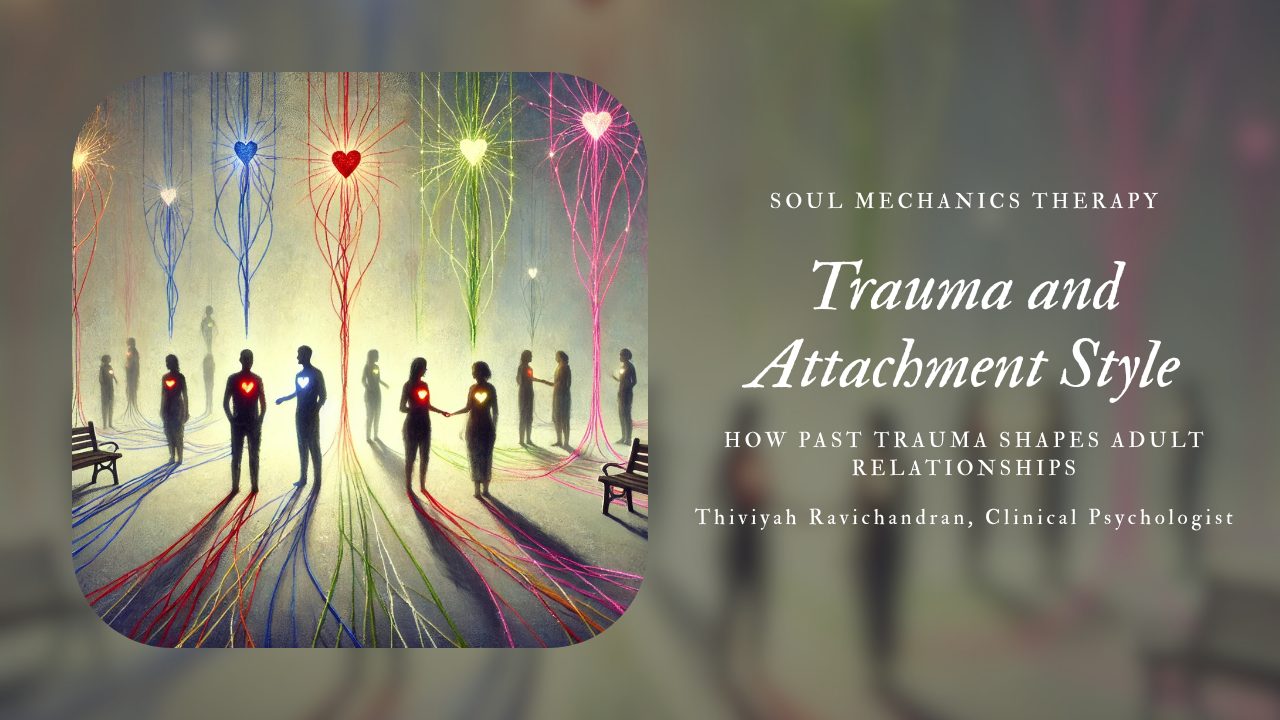
Trauma and Attachment Style: How Past Trauma Shapes Adult Relationships
Many people notice that their reactions in relationships do not always make sense to them. Trauma and attachment style often explain why intimacy, distance, or emotional closeness can feel confusing or overwhelming in adult relationships.
These patterns are not random. In fact, trauma and attachment style are deeply connected. Many adult attachment patterns trace back to early relational experiences and the ways the nervous system learned to cope with emotional safety or the absence of it.
Attachment style is not a personality flaw or a fixed label. Rather, it reflects how the body and mind adapted to connection in earlier relationships, especially during childhood or formative emotional experiences. Past trauma does not live only in memory. Instead, it quietly shapes how we trust, how we respond to closeness, and how we protect ourselves in adult relationships.
Understanding trauma and attachment style helps explain why some people fear abandonment, struggle with vulnerability, or feel emotionally distant even when they desire closeness.
If you would like a broader understanding of how emotional patterns influence romantic relationships, you may explore our Relationship Psychology Guide.
Trauma and attachment style describe how early emotional experiences shape adult patterns of trust, closeness, and vulnerability in relationships.
What Is Attachment Style in Relationships?
Attachment style refers to the emotional patterns people develop when forming relationships with others. These patterns are shaped during early life experiences and influence how individuals experience trust, connection, and vulnerability in adulthood.
According to attachment theory, individuals may develop several attachment patterns depending on their early relational environment. Research in psychology has widely supported the role of early attachment experiences in shaping adult relationships.
Trauma and attachment style are closely connected because the nervous system learns how safe connection feels based on early experiences.
Attachment Style as a Response to Safety and Vulnerability
Attachment theory is not simply about bonding with caregivers. At its core, it is about safety.
When a child feels seen, soothed, and emotionally supported, they are more likely to develop a secure internal sense of connection. However, when emotional attunement is inconsistent, frightening, or absent, the nervous system adapts to survive.
Trauma, whether emotional, relational, or developmental shapes how this adaptation forms.
For example:
- A child who learns that comfort is unreliable may develop anxiety around losing connection.
- A child who feels rejected or overwhelmed may suppress their needs.
- A child who grows up in chaos or fear may remain guarded long after the danger has passed.
Over time, these adaptations solidify into adult attachment patterns. Importantly, they do not form as conscious choices, but as survival strategies shaped by trauma and attachment history.
Anxious Attachment and Fear of Loss
People with an anxious attachment style often describe themselves as deeply caring and emotionally attuned, yet internally unsettled in relationships.
You may explore this further in our article Anxious Attachment: Why You Love Hard, Worry More, and Struggle to Let Go.
They may:
- fear abandonment
- seek reassurance frequently
- become sensitive to small changes in behaviour
This attachment style frequently develops in environments where love existed but felt unpredictable.
In adulthood, the nervous system continues to anticipate disconnection, even when a partner is supportive.
Anxious attachment is not clinginess.
Instead, it is grief that has not yet been soothed.
Avoidant Attachment and Emotional Distance
Avoidant attachment often forms in environments where emotional expression was discouraged, ignored, or met with stress.
In these settings, the child learns that relying on others brings discomfort rather than safety.
As adults, individuals with avoidant attachment may avoid vulnerability or withdraw when intimacy deepens.
You may also read our article Attachment Styles: Dating Someone With Avoidant Attachment to understand how avoidant patterns influence relationships.
This does not mean they lack emotion.
Avoidant attachment is not indifference.
It is protection shaped by trauma and emotional self-preservation.
Disorganized Attachment and Relational Confusion
Disorganised attachment develops when relationships were both a source of care and a source of fear.
This may occur in environments involving abuse, emotional volatility, or unresolved trauma in caregivers.
In adulthood, this attachment style may show up as emotional push-pull.
People may simultaneously:
- crave closeness
- fear emotional harm
- withdraw suddenly during intimacy
Disorganized attachment reflects a nervous system that once had to survive impossible emotional conditions.
Can Trauma Affect Attachment Style in Adult Relationships?
Yes. Trauma can significantly influence attachment patterns in adulthood.
Trauma and attachment style may appear through emotional or physical responses such as:
- tension during emotional closeness
- fear when partners withdraw
- emotional shutdown during conflict
- heightened anxiety about abandonment
These reactions are often automatic nervous system responses rather than conscious decisions. In some cases, they may also appear as relationship anxiety, where individuals constantly worry about the stability of their relationship.
Understanding these patterns helps people approach their reactions with compassion rather than shame.
When Secure Attachment Develops Despite Trauma
Trauma does not automatically prevent secure attachment.
Some individuals experience early hardship but still receive enough emotional attunement from caregivers, mentors, or supportive figures to develop resilience.
Secure attachment allows people to regulate emotions within relationships while still maintaining vulnerability.
Security does not mean the absence of fear.
Instead, it reflects the ability to remain emotionally connected even when difficulties arise.
Healing Trauma and Attachment Through Safe Relationships
Attachment wounds rarely heal through self-criticism or emotional suppression. Research on trauma and emotional regulation shows that supportive relationships and therapeutic environments can help the nervous system relearn safety.
Instead, healing occurs through experiences of emotional safety and relational stability.
This process may develop through:
- therapy
- supportive relationships
- emotionally consistent environments
Over time:
- anxious attachment learns that closeness does not require constant vigilance
- avoidant attachment learns that vulnerability can exist alongside safety
- disorganised attachment learns that connection can become stable and predictable
Healing trauma and attachment style is a gradual relational process.
Reflection
If your attachment patterns feel confusing or painful, it does not mean you are broken.
It means your nervous system adapted in ways that once helped you survive difficult relational environments.
Those responses were intelligent.
Now, with awareness and support, you can begin building relationships where safety does not need to be constantly defended.
You are not defined by trauma.
You are shaped by resilience and your capacity to heal through connection.
Therapy Support in Kuala Lumpur, Petaling Jaya and Ipoh
If trauma and attachment patterns continue to affect your relationships, therapy can help you understand these responses with care rather than self-blame.
At Soul Mechanics Therapy, we support individuals and couples across Kuala Lumpur, Petaling Jaya, and Ipoh, helping them explore attachment styles, heal relational trauma, and develop safer ways of connecting.
This article is for educational purposes and does not replace personalised mental health care.
If you would like to understand how psychological patterns shape romantic relationships, you may read our Relationship Psychology Guide.
Meet Our Relationship Experts
At Soul Mechanics Therapy, relationship work is approached with both psychological insight and deep compassion. Our therapists support individuals and couples navigating communication breakdown, attachment struggles, emotional disconnection, and trust challenges.
Each therapist brings a unique perspective shaped by their clinical experience and therapeutic approach. Together, they help clients understand the emotional patterns influencing their relationships and develop healthier ways of connecting.

Ms Devi; Relationship Dynamics, Communication and Couples Therapy
Ms Devi works extensively with individuals and couples navigating relationship conflict, communication difficulties, emotional disconnection, and trust challenges. Her work often focuses on helping couples understand the deeper emotional patterns that drive repeated arguments, misunderstandings, or feelings of distance within the relationship.
Clients frequently describe Ms Devi as creating a safe, calm, and non-judgmental space where both partners feel heard and understood. Many couples share that her sessions help them recognize patterns they were previously unaware of, allowing them to communicate more openly and navigate conflict with greater empathy.
In couples therapy, Ms Devi helps partners explore their attachment styles, emotional triggers, and communication habits, guiding them toward healthier ways of expressing needs and resolving disagreements. Her approach often combines thoughtful reflection with practical tools that couples can apply in everyday situations.
Clients often report leaving sessions with a clearer understanding of themselves and their partner. Over time, many couples describe feeling more connected, emotionally aware, and better equipped to manage difficult conversations within their relationship.

Ms Kelly; Relationship Anxiety, Emotional Regulation and Neurodivergent Relationships
Ms Kelly supports individuals experiencing relationship anxiety, emotional overwhelm, and difficulties regulating thoughts and feelings within relationships. Her work frequently involves helping clients understand how anxiety, self-criticism, and past experiences influence the way they interpret and respond to relationship situations.
Clients often appreciate Ms Kelly’s ability to combine warmth with thoughtful guidance. Many describe her as approachable and direct, helping them recognise emotional patterns while also offering practical strategies for managing stress, overthinking, and self-doubt.
Her sessions often involve helping individuals develop greater emotional awareness, healthier coping strategies, and clearer ways of understanding their internal experiences. Clients frequently mention gaining valuable tools, frameworks, and reframing techniques that help them navigate difficult emotions both within relationships and in daily life.
Ms Kelly also works with individuals who identify as neurodivergent, including those experiencing ADHD or related challenges. Clients often share that her understanding of neurodivergent thinking styles helps them feel understood in ways they had not experienced previously in therapy.
Through this work, many clients describe feeling more capable of regulating emotions, improving communication with their partners, and approaching relationships with greater clarity and confidence.

Ms Shaundtrya – Self-Worth, Emotional Safety and Relationship Communication
Ms Shaundtrya’s work focuses on helping individuals and couples rebuild self-worth, emotional safety, and healthier communication within relationships. She often supports clients who feel unheard, overwhelmed by relationship difficulties, or unsure how to express their emotions in ways that feel safe and authentic.
Clients frequently describe Ms Shaundtrya as warm, compassionate, and deeply attentive. Many share that her ability to listen patiently and gently explore emotional experiences helps them feel seen and understood at a deeper level.
Her therapeutic approach often involves helping clients recognize how past experiences, family dynamics, and generational patterns influence their current relationships. Through this process, individuals begin to understand their emotional triggers, rebuild confidence, and develop stronger boundaries.
Couples who work with Ms Shaundtrya often report improvements in how they communicate with one another. Clients frequently describe feeling more comfortable expressing emotions, understanding their partner’s perspective, and reconnecting after periods of conflict or emotional distance.
Many individuals also share that her guidance helps them reconnect with their sense of self, gradually building greater emotional clarity, resilience, and confidence in their relationships.
If you would like to better understand how attachment patterns, emotional triggers, and communication habits influence romantic relationships, you may explore our Relationship Psychology Guide here.
You can also visit our team page to learn more about the therapists at Soul Mechanics Therapy and how they support individuals and couples navigating relationship challenges.