
Family Patterns and Self-Worth: How Childhood Shapes Confidence
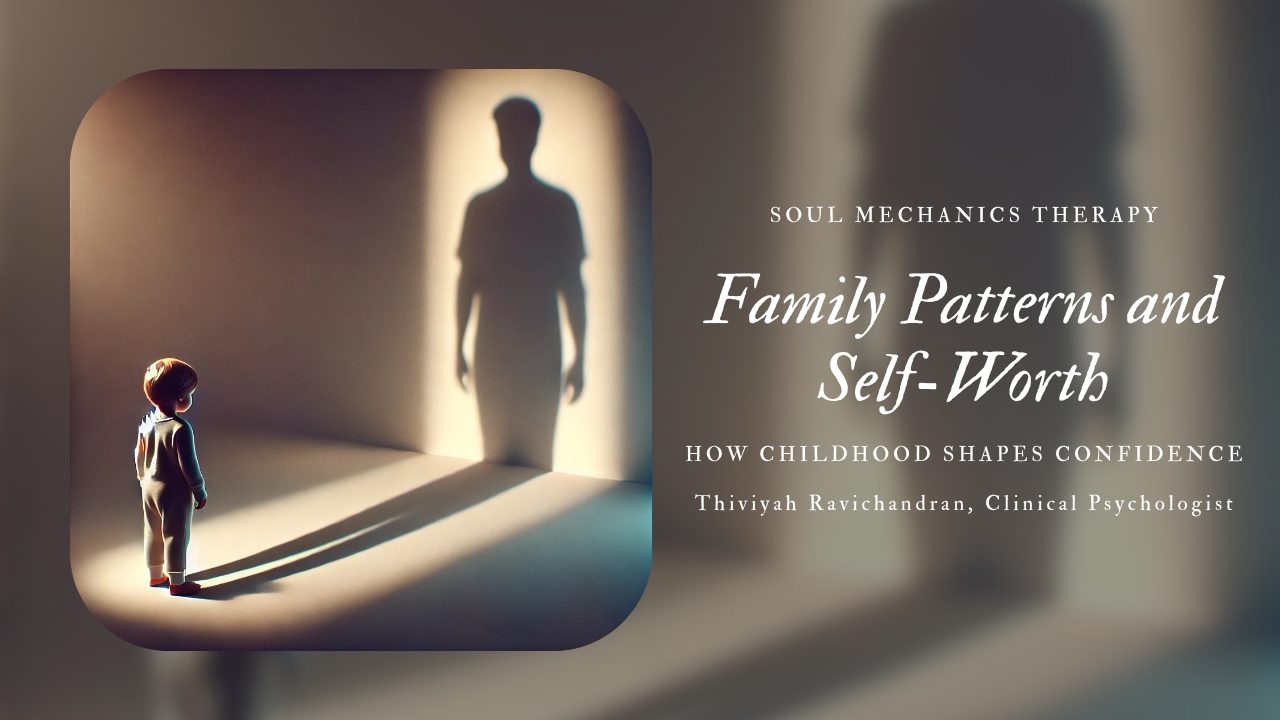
Family Patterns and Self-Worth: How Childhood Shapes Confidence

Written By: Thiviyah Ravichandran, Clinical Psychologist (MAHPC(CP)00620),
Family patterns and self-worth are deeply connected. The way you see yourself today your confidence, inner voice, and sense of value often grows from the emotional environment you experienced growing up. Many people don’t realize how unresolved family dynamics quietly shape their beliefs about worthiness, belonging, and identity. These patterns develop slowly over time, influencing how you respond to relationships, expectations, and even your own achievements.
In many Malaysian families, emotional roles and expectations are often unspoken. You may notice self-doubt, people-pleasing, perfectionism, fear of disappointing others, or a constant feeling of “not enough,” even when others recognise your strengths. These experiences are not signs of weakness. They often reflect emotional patterns that were never fully acknowledged or healed.
Understanding family patterns and self-worth is not about blaming the past. It is about recognising where certain beliefs began, so you can begin to reshape them with compassion.
Understanding Family Patterns and Self-Worth in Adulthood
Unresolved family patterns refer to emotional roles, behaviours, and coping styles that quietly repeat across generations. They influence how love, approval, conflict, and safety were expressed at home.
You may have grown up in an environment where:
- Achievement defined worth
- Emotions were dismissed or minimised
- Affection felt conditional
- Mistakes brought shame instead of guidance
- Conflict was avoided or became overwhelming
- Comparison and criticism felt normal
Even loving families can pass down emotional habits shaped by stress, culture, or survival. Children adapt naturally becoming quiet, strong, high-achieving, or emotionally contained and these adaptations can shape adult confidence. If you want to understand how early emotional experiences influence adulthood, you may also explore Childhood Trauma Signs in Malaysia.
How Childhood Roles Influence Confidence and Self-Worth
Children rarely question the environment they grow up in. Instead, they adapt.
Some common emotional roles include:
- The “responsible one” who holds everything together
- The “quiet one” who avoids conflict
- The “achiever” who seeks validation through success
- The “peacekeeper” who absorbs emotional tension
Over time, these roles can influence family patterns and self-worth. You might also recognise similar patterns in Internalized Guilt and Self-Blame, where emotional responsibility becomes overwhelming.
Confidence becomes tied to performance instead of identity.
When Family Patterns Shape Self-Doubt Instead of Confidence
Consistent emotional support helps children internalise a healthy belief:
“I matter. I am allowed to take up space.”
However, when validation feels conditional, based on obedience, performance, or emotional silence a different belief may develop:
- “I must earn love.”
- “My needs are a burden.”
- “I should not upset others.”
In adulthood, this may look like:
- Apologising excessively
- Doubting praise
- Feeling uncomfortable receiving support
- Staying in unbalanced relationships
- Constant comparison with peers
Self-worth becomes fragile because it was built around expectation rather than internal safety.
Confidence as Self-Protection, Not Self-Trust
Some people appear confident yet carry deep self-doubt internally. High achievement or independence can become emotional armour.
You may:
- Push through instead of asking for help
- Stay strong instead of expressing hurt
- Prioritise others’ needs over your own
These behaviours often reflect survival strategies shaped by earlier family dynamics.
If these patterns feel familiar, you can learn more about our Individual Therapy Services in Kota Damansara and Ipoh.
Breaking Family Patterns to Rebuild Self-Worth
Healing family patterns and self-worth begins with awareness.
Instead of asking:
“Why am I like this?”
You may begin asking:
“Where did I learn this?”
You might notice:
- Self-criticism echoes earlier voices
- Perfectionism protects against disapproval
- Silence formed from emotional invalidation
- People-pleasing developed as a safety strategy
Naming the pattern creates space for change.
If you’d like to explore emotional patterns further, you can learn more about emotional wellbeing through Malaysian mental health education resources such as Ministry of Health Malaysia.
Rebuilding Self-Worth Beyond Family Expectations
True confidence grows when self-worth becomes internal rather than performance-based.
Healing may involve:
- Speaking to yourself with compassion
- Honouring emotions without judgement
- Setting boundaries gently but firmly
- Allowing rest, support, and imperfection
You don’t need to erase your family story. You are simply allowed to grow beyond it.
A Gentle Reflection
Family patterns and self-worth can quietly shape how much space you believe you deserve in the world. But these patterns are not your identity they are environments you adapted to.
Your worth was never meant to depend on perfection, silence, or constant strength.
The moment you understand where your beliefs began, you create space to rewrite them. And in that process, confidence becomes something deeper than performance it becomes self-acceptance.
If this reflection resonates with you, you may also find insight in our article on Understanding Emotional Triggers and Reactions, where we explore how past experiences shape present emotions.