
Emotional Triggers Explained: Why You React the Way You Do
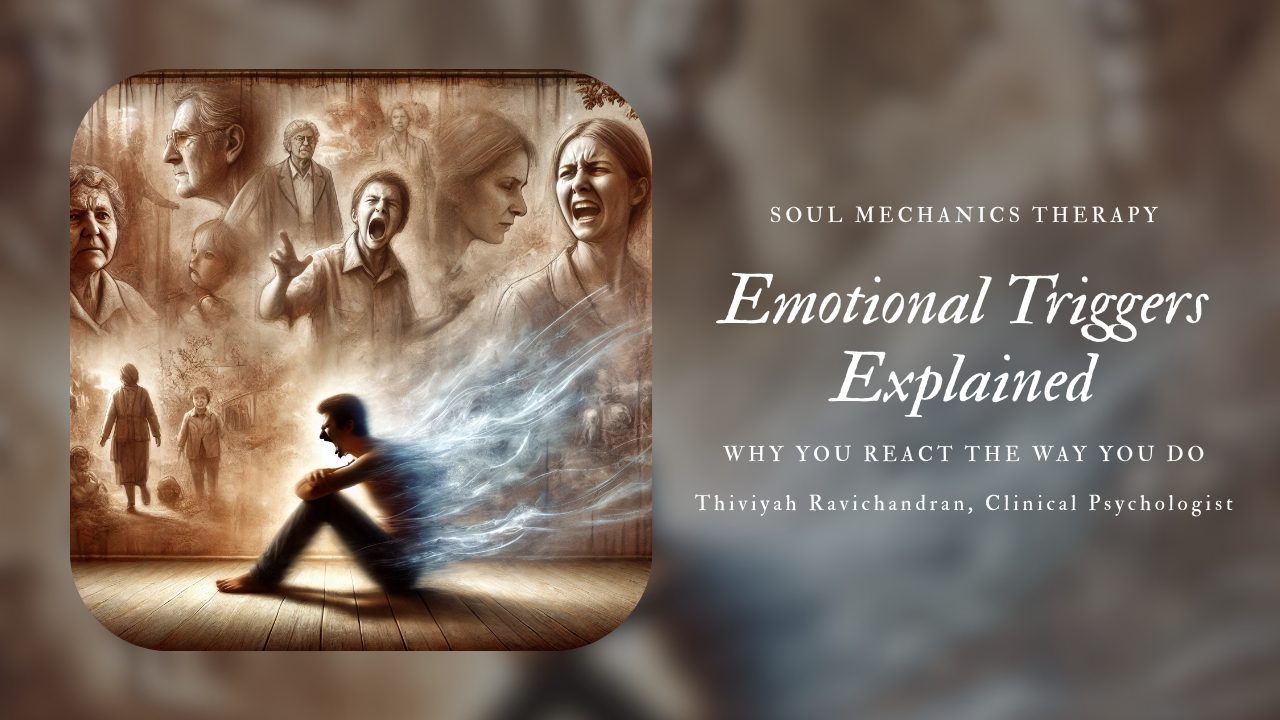
Emotional Triggers Explained: Why You React the Way You Do

Written By: Thiviyah Ravichandran, Clinical Psychologist (MAHPC(CP)00620),
Emotional triggers psychology helps explain why certain words, situations, or behaviours can suddenly shift your mood or reactions. Many people in Malaysia notice that a harmless comment feels personal, a small disagreement turns emotional, or familiar situations spark frustration, sadness, or anxiety before they fully understand why.
These reactions are rarely random. Emotional triggers often reflect how your nervous system has learned to protect you based on past experiences. Understanding emotional triggers is not about blaming yourself. Instead, it is about learning how your mind and body respond to emotional memories and stress.
What Are Emotional Triggers in Psychology?
In emotional triggers psychology, a trigger refers to any experience that activates a strong emotional response, sometimes unexpectedly or more intensely than the situation seems to warrant.
These reactions are often connected to:
- earlier relationship experiences
- moments of rejection or criticism
- unresolved emotional stress
- personal insecurities or fears
When something reminds the brain of a previous emotional wound, it reacts quickly to protect you even if the present situation feels safe.
How Emotional Triggers Affect the Brain and Nervous System
From a psychological perspective, emotional triggers activate the brain’s protective system. The amygdala constantly scans for patterns linked to past stress or emotional pain. When it detects something familiar, your body may react instantly.
You might notice:
- a racing heartbeat
- tension in the body
- sudden defensiveness
- emotional withdrawal
- overwhelming anxiety or irritation
This response does not mean you are irrational. It reflects how the nervous system prioritizes safety over logic.
Where Emotional Triggers Often Begin
Many emotional triggers develop through relational experiences over time. In therapy across Kuala Lumpur, Petaling Jaya, and Ipoh, we often see triggers linked to:
- childhood environments where emotions felt unsafe
- past relationships involving betrayal or inconsistency
- high expectations or criticism
- stressful or traumatic experiences
Triggers are not signs of weakness. They are emotional patterns shaped by lived experience.
Why Your Reaction Sometimes Feels Bigger Than the Situation
A triggered response usually carries emotional history. The present moment may only be a small part of what you are feeling.
For example:
- a tone of voice may echo earlier criticism
- feeling ignored may awaken old experiences of rejection
- conflict may activate fears of abandonment
Your reaction is not exaggerated. It is layered with past emotional memory.
Emotional Triggers and the Body’s Survival Response
Emotional triggers psychology also recognizes the role of the nervous system. When triggered, the body may shift into:
- fight (arguing or defensiveness)
- flight (avoidance or withdrawal)
- freeze (shutting down emotionally)
These responses once helped you cope. However, they can continue even when the original danger is no longer present.
Becoming Aware of Your Emotional Triggers
Awareness is often the first step toward change. Instead of criticising yourself, try gently asking:
- What feeling came up in this moment?
- Have I felt this before?
- What fear might be underneath this reaction?
Often, the deeper emotion beneath irritation is vulnerability, fear of rejection, fear of failure, or fear of not being enough.
Healing Emotional Triggers With Compassion and Support
Healing emotional triggers does not mean eliminating emotions. It means helping your nervous system recognize that the present moment is different from the past.
Many people begin this process by:
- slowing down before reacting
- grounding the body through breath or movement
- allowing emotions to exist without judgement
Therapy can also provide a safe space to explore emotional triggers gently. Over time, the brain learns that certain situations no longer require protection, and reactions become calmer and more intentional.
At Soul Mechanics Therapy, we support individuals in Kuala Lumpur, Petaling Jaya, and Ipoh who feel overwhelmed by recurring emotional reactions, relationship stress, or internal pressure. Therapy focuses on understanding patterns rather than forcing change.
Final Reflection
ou react the way you do because your mind and body remember what you have experienced. Emotional triggers are not flaws. They are signals pointing toward parts of your story that deserve understanding.
When you begin to understand your emotional triggers, you move from reacting automatically to responding with awareness. That shift becomes the starting point for emotional growth, healthier relationships, and a deeper sense of safety within yourself.
If you enjoyed reading this, why not broaden your knowledge by learning about "Anxiety: Morning Rituals"? You can read the blog here.
For more content related to mental health, follow us on our official Instagram.