
Grieving Your Younger Self: Saying Goodbye
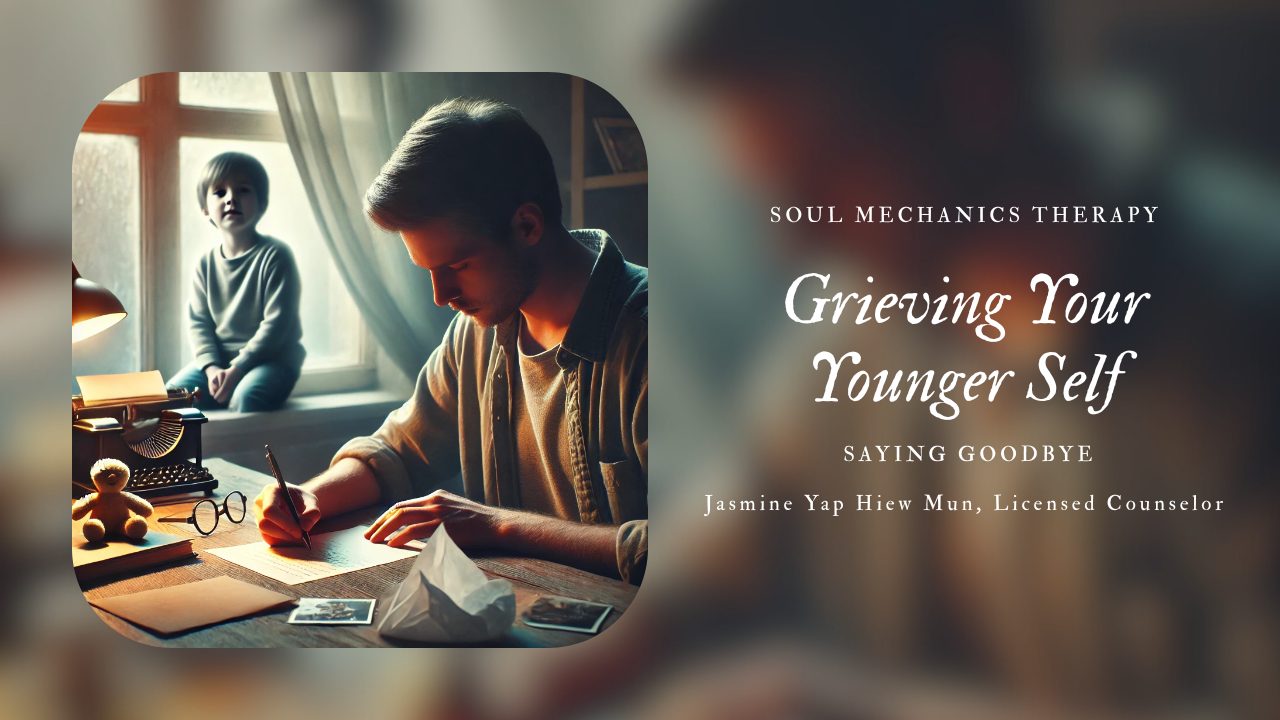
Grieving Your Younger Self: Saying Goodbye

Written By: Jasmine Yap Hiew Mun, Licensed Counselor (KB12644)
A Letter to My Younger Self
Grieving your younger self can feel unfamiliar, even confusing. Yet for many people, saying goodbye to who they once were is a quiet but powerful form of grief.
Dear Younger Self,
I didn’t realise that saying goodbye to you could be considered grief.
As I grew older, I rarely paused to think about you or speak to you. Instead, I assumed you were still somewhere inside me, even as I continued to grow and change. At the same time, I felt unsure whether I was still allowed to care about you or whether I needed to offer you a proper goodbye.
Now, I understand that grieving my younger self does not mean rejecting you. Rather, it means appreciating you with honesty and compassion.
There are moments I wish I had handled differently. I wish I had made better choices. I also wish I had cherished certain people more deeply. Still, I recognise that you did the best you could with what you knew at the time.
I am not leaving you behind.
Instead, I am carrying you forward with acceptance.
Thank you for being who you were.
I hope you like who we are becoming.
Warm regards,
Your Current Self
What Does It Mean to Grieve Your Younger Self?
When people think of grief, they often associate it only with death. However, grieving your younger self is another valid and meaningful form of grief.
As we grow, we naturally outgrow certain versions of ourselves. Often, society treats this process as “normal” and not something that needs reflection or care. Yet becoming who you are today required resilience, adaptation, and emotional strength.
Your younger self, the part of you that carried fear, hope, confusion, or responsibility often longs to be acknowledged. Therefore, grieving this version of yourself allows integration rather than denial.
How Grieving Your Younger Self Shows Up in Adulthood
In adulthood, grief for a younger self often appears quietly rather than dramatically.
For instance, some people feel a persistent sense of longing without knowing why. Others feel unexpectedly triggered by childhood memories or situations that resemble earlier struggles. Over time, disconnecting from a younger self can also create emotional distance in the present.
As a result, people may experience:
- Harsh self-criticism
- Difficulty with vulnerability
- Feeling lost or fragmented
This experience does not mean something is wrong. Instead, it often means a part of the self was never acknowledged or gently released.
Why Saying Goodbye to Your Younger Self Is Not Abandonment
Healing does not require forgetting your younger self. On the contrary, grieving your younger self is an act of self-compassion.
Saying goodbye means recognizing that this part of you has become integrated into who you are today. You no longer live as that version, but you carry their experiences, strengths, and lessons forward.
In this way, grief creates continuity rather than loss.
When Grieving Your Younger Self Becomes Healing
Often, this form of grief emerges only when you begin to feel safer in life. When safety increases, emotions that were once suppressed finally have space to surface.
Although the pain can feel overwhelming at first, allowing yourself to grieve builds resilience. Instead of avoiding discomfort, you learn that you can feel deeply and remain whole.
Ultimately, grieving your younger self allows growth to happen with compassion rather than self-rejection.
A Gentle Reminder
Grieving your younger self does not mean abandonment.
Rather, it means you are safe enough to acknowledge loss.
Most importantly, it means you are learning to accept yourself fully.
This step, although quiet, is a powerful movement toward self-compassion and healing.
If you’re looking for a therapist in Kota Damansara or Ipoh area, you can click here for more information.
If you enjoyed reading this, why not broaden your knowledge by learning about "Disenfranchised Grief"? You can read the blog here.
For more content related to mental health, follow us on our official Instagram.