
The Trauma of Growing Up With High Expectations in Asian Families
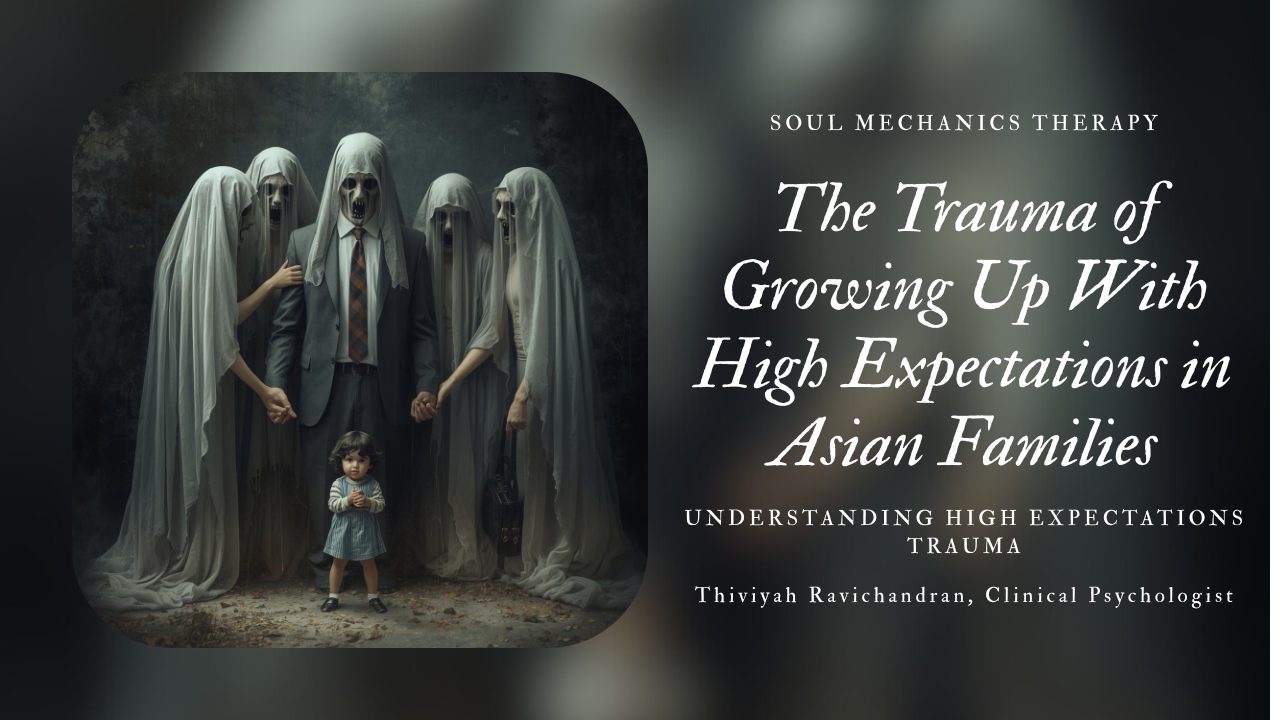
The Trauma of Growing Up With High Expectations in Asian Families

Written By: Thiviyah Ravichandran, Clinical Psychologist (MAHPC(CP)00620),
Many people who grew up in Asian family environments were raised on messages like “work hard,” “do your best,” and “make the family proud.” These expectations were rarely meant to harm. They were often rooted in love, sacrifice, and a deep desire to secure stability and dignity for the next generation.
Many parents carried their own histories of hardship migration stress, financial pressure, social stigma, or survival-based upbringing. High achievement became a way to protect their children from suffering the same struggles.
But for many children, those expectations did not always feel like support. Instead, they felt like weight.
A quiet, constant pressure to succeed.
To perform.
To meet standards that left little space for emotional vulnerability or personal identity.
Years later, many adults in Kuala Lumpur, Petaling Jaya, and Ipoh begin to recognize that what they experienced was not simply “strict parenting,” but a form of emotional trauma shaped by responsibility, comparison, and fear of disappointment.
This is not about blaming parents or rejecting culture.
It is about acknowledging an emotional reality that often remains unspoken.
How High Expectations in Asian Families Become Traumatic
Growing up with high expectations can become traumatic when love, safety, or belonging feel tied to performance rather than emotional connection. Over time, children may learn that success equals acceptance, while failure equals shame or emotional withdrawal.
This pattern does not always look abusive.
Often, it looks normal.
High Expectations as a Cultural Experience
In many Asian families, expectations are intertwined with values such as:
- Family honour
- Discipline and resilience
- Academic and professional success
- Responsibility toward parents and future generations
Children learn early that success is not just personal. It reflects on the entire family. Failure does not feel like a mistake, it feels like shame, embarrassment, or loss of respect within the community.
Most children internalise these expectations quietly. They learn to:
- Study harder
- Push themselves further
- Avoid mistakes
- Stay obedient, grateful, and emotionally contained
Challenging expectations can feel like disrespect or betrayal. Over time, achievement becomes linked to safety and belonging.
The unspoken message becomes:
You are valued when you succeed.
You are safe when you perform well.
Even when parents care deeply, success can begin to feel like a condition for love.
When Achievement Becomes a Form of Survival
Many children raised under high expectations do not rebel, they comply.
They become:
- The hardworking student
- The responsible eldest child
- The dependable sibling
- The quiet one who never causes trouble
They rarely express distress because emotional vulnerability feels risky or burdensome.
Externally, they appear disciplined, mature, and high-achieving.
Internally, they often carry:
- Chronic tension
- Fear of failure
- Guilt when resting
- A belief that they must constantly prove themselves
Achievement stops feeling like growth.
It becomes survival.
They are no longer striving forward.
They are running from disappointment.
Success becomes the only safety they know.
The Invisible Emotional Wounds of High Expectations
The trauma of high expectations is often subtle rather than dramatic.
Many adults realize they grew up believing they had no right to struggle. They learned:
- Not to ask for help
- Not to show distress
- Not to burden others with feelings
Instead, they coped in silence.
Over time, this creates:
- Perfectionism without satisfaction
- Difficulty resting without guilt
- Suppression of needs, desires, or identity
The emotional wound is quiet.
It hides beneath competence and strength.
How This Trauma Affects Mental Health in Adulthood
As adults, many people raised under high expectations experience:
- Anxiety around performance
- Fear of criticism
- Constant self-monitoring
- Difficulty feeling proud of themselves
Even success may never feel like “enough.”
Some experience burnout, emptiness, or depression beneath outward competence. Others struggle in relationships because they learned how to be reliable but not how to be emotionally open.
Asking for support may bring guilt or shame. Receiving comfort can feel unfamiliar.
Self-worth becomes conditional, tied to productivity, sacrifice, or achievement.
In therapy settings across KL, Petaling Jaya, and Ipoh, this pattern is commonly seen in high-functioning adults who appear capable while quietly struggling with anxiety, burnout, or low mood.
Love That Was Real, But Often Unspoken
It is important to acknowledge a painful truth with compassion:
Many Asian parents loved deeply.
Their love was often expressed through:
- Financial sacrifice
- Providing education
- Long working hours
- Ensuring opportunities they never had
But when love is expressed mainly through pressure or responsibility rather than emotional attunement, children may grow up feeling cared for but not fully seen.
Many adults say:
“I know my parents love me… but I didn’t always feel understood.”
This emotional gap does not erase the love.
But it shapes how a child learns to relate to themselves.
Identity Beneath Expectation
One lasting impact of growing up with high expectations is identity confusion in adulthood.
Many adults later wonder:
- Who am I outside of achievement?
- What do I want, not what is expected of me?
- Do my choices belong to me, or to my upbringing?
These questions are not disloyal.
They emerge naturally when a person finally has space to hear their own voice.
Healing From Expectation-Based Trauma With Cultural Compassion
Healing does not require rejecting culture, family, or parents.
It involves holding two truths at once:
- Your parents wanted you to succeed
- Some expectations caused emotional pain
Both can be real.
In therapy, healing often includes:
- Grieving emotional needs that went unmet
- Learning to recognise and name feelings
- Separating identity from performance
- Rebuilding self-worth beyond achievement
- Allowing rest without guilt
Over time, many people begin to realise:
My worth does not need to be earned.
It was always there.
Therapy Support in Kuala Lumpur, Petaling Jaya And Ipoh
If you grew up under high expectations in an Asian family and now struggle with anxiety, burnout, or emotional disconnection, therapy can provide a space to explore these experiences safely and without judgment.
At Soul Mechanics Therapy, we support individuals and couples across Kuala Lumpur, Petaling Jaya, and Ipoh, helping high-functioning adults reconnect with their emotional needs, identity, and sense of self at a pace that feels respectful and culturally sensitive.
Healing is not a rejection of your family or culture.
It is an act of compassion toward the child who carried too much and the adult who deserves to finally include themselves.
This article is for educational purposes and does not replace personalized mental health care.
If you enjoyed reading this, why not broaden your knowledge by learning about “High-Functioning Depression Signs: When Success Feels Empty”? You can read the blog here.
For more content related to mental health, follow us on our official Instagram.