
Child Tantrums Psychology: Why Emotional Meltdowns Happen
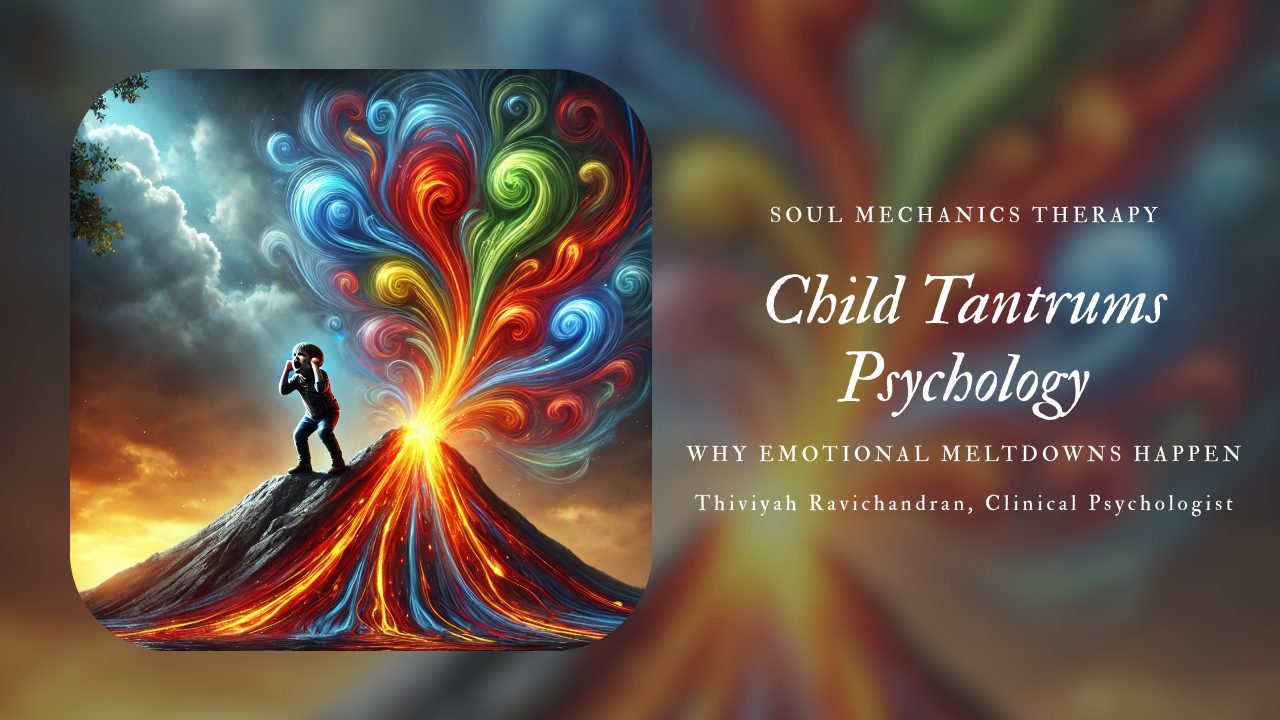
Child Tantrums Psychology: Why Emotional Meltdowns Happen

Written By: Thiviyah Ravichandran, Clinical Psychologist (MAHPC(CP)00620),
Child tantrums psychology helps us understand that what looks like misbehaviour is often a child’s overwhelmed nervous system asking for support. In many Malaysian households, tantrums are quickly labelled as stubbornness or poor discipline. A child cries loudly in a supermarket aisle or refuses to leave the playground, and adults feel pressured to respond quickly.
However, modern psychology offers a gentler and more accurate perspective. Emotional meltdowns are not simply bad behaviour. They are signals that a child’s developing brain is struggling to manage intense emotions.
To truly support children, we need to look beyond the noise and understand the emotional world behind the behaviour.
Child Tantrums Psychology: A Stress Response, Not a Choice
Adults regulate frustration using reasoning and emotional awareness. Children are still developing these skills. The emotional brain matures earlier than the logical brain, which means feelings arrive strongly while regulation skills are still forming.
When a child becomes overwhelmed, the nervous system reacts automatically. A tantrum often reflects emotional overload rather than defiance. Just as adults may cry or shut down under pressure, children express stress outwardly.
Understanding child tantrums psychology allows parents to shift from punishment toward emotional guidance.
What Happens Inside the Brain During Emotional Meltdowns
During a meltdown, the brain enters a survival response. Stress hormones increase, heart rate rises, and logical thinking becomes temporarily unavailable. This is why reasoning with a child during a tantrum rarely works.
The child is not refusing to listen. At that moment, their brain cannot process complex explanations.
Psychological research also highlights how repeated emotional stress can affect regulation development. Malaysian mental health education initiatives by the Ministry of Health Malaysia emphasize the importance of emotional wellbeing in early development.
Common Triggers Behind Child Tantrums
Tantrums rarely happen without reason. They are often linked to everyday stressors such as:
- Fatigue or hunger
- Loud environments or overstimulation
- Changes in routine
- Frustration when learning new skills
- Feeling misunderstood or unheard
To adults, these triggers may seem small. To a child whose regulation skills are still developing, they feel overwhelming.
Why Labelling Tantrums as Bad Behaviour Can Backfire
When adults interpret meltdowns as misbehavior, children may internalize harmful beliefs:
- “My feelings are wrong.”
- “I must hide my emotions.”
- “I am too much.”
Over time, this can lead to emotional suppression rather than regulation. A quiet child is not always a calm child. Sometimes, they simply learn that expressing emotions feels unsafe.
Tantrums as Communication, Not Control
Child tantrums psychology views meltdowns as a form of emotional communication. A child may be expressing:
- “I am overwhelmed.”
- “This is too much for me.”
- “I need help calming down.”
When parents respond with curiosity instead of judgement, children begin to feel emotionally safe. That safety becomes the foundation for long-term resilience.
If you’ve noticed patterns of emotional overwhelm, you may also find our article on When Your Child Is Overwhelmed helpful.
Emotional Co-Regulation: How Children Learn to Calm Down
Children do not learn emotional regulation in isolation. They learn through connection.
A calm adult presence helps regulate a child’s nervous system. Gentle responses such as acknowledging feelings, lowering your tone, or staying physically present can make a significant difference.
Organisations like Befrienders Malaysia also highlight the importance of emotional support and safe connection in mental health development.
Should Parents Ignore Tantrums?
Ignoring emotional distress may stop the visible reaction temporarily, but it does not address the underlying need. Children grow through guidance, validation, and emotional safety.
The goal is not to eliminate emotions but to help children move through them safely.
What Tantrums Teach Us About Emotional Development
Tantrums remind us that emotional regulation is a skill built over time. Supporting a child through emotional meltdowns teaches:
- Self-awareness
- Emotional language
- Trust in relationships
- Confidence in expressing feelings
Ultimately, tantrums are not signs of failure. They are opportunities for connection and growth.
A Gentle Next Step
If your child’s emotional meltdowns feel overwhelming or confusing, you are not alone. Many Malaysian parents seek support when behaviour begins affecting daily life or family relationships.
At Soul Mechanics Therapy, we support families in Kuala Lumpur, Petaling Jaya, and Ipoh who want to better understand their child’s emotional world.
If you feel ready, you may explore therapy support here at your own pace.
You don’t need to have everything figured out before reaching out.