
People-Pleasing Trauma: Why Saying No Feels Hard
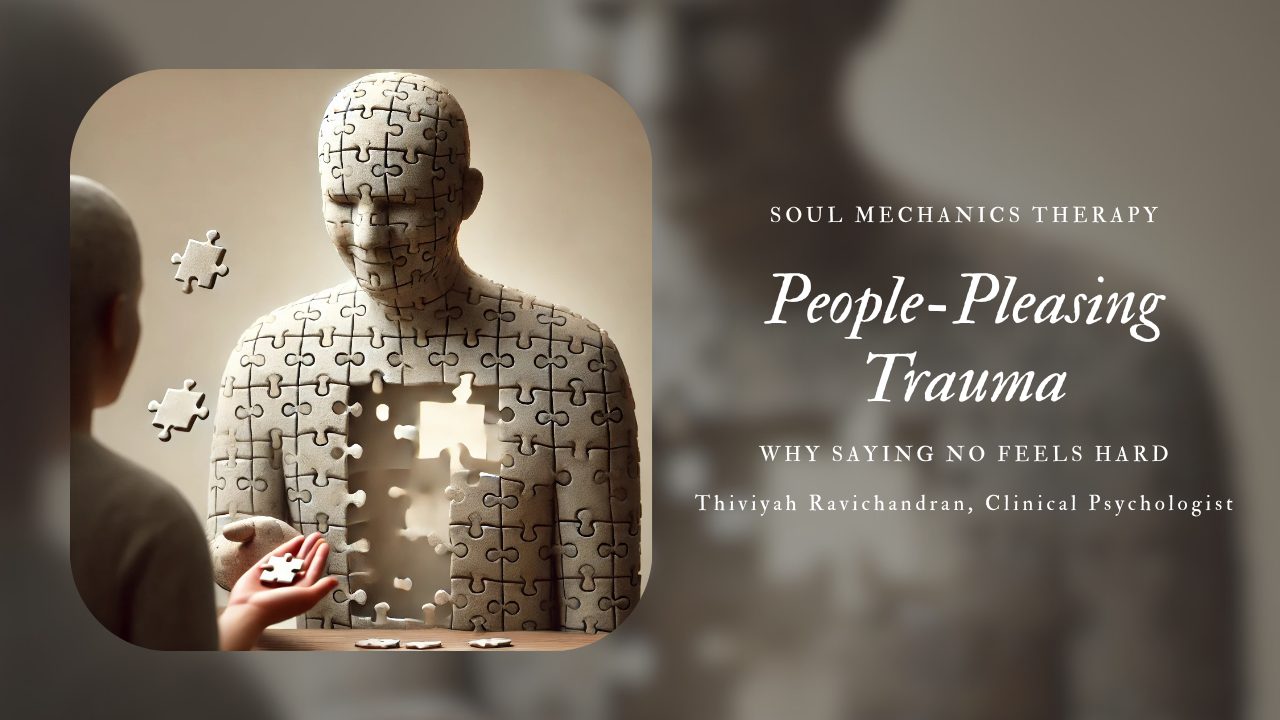
People-Pleasing Trauma: Why Saying No Feels Hard

Written By: Thiviyah Ravichandran, Clinical Psychologist (MAHPC(CP)00620),
People-pleasing trauma often hides behind kindness, patience, and the desire to keep harmony. Many Malaysians grow up believing that being helpful and agreeable is a sign of good character. However, constantly putting others first can slowly disconnect you from your own needs.
At first glance, people-pleasing looks positive. You may be the reliable one, the listener, or the person everyone turns to for support. Yet over time, always saying yes can come from fear rather than genuine choice fear of conflict, rejection, or disappointing someone important.
Instead of being a personality flaw, people-pleasing is often a learned emotional response.
Where These Patterns of People Pleasing Trauma Begin
In many cases, these patterns develop quietly during childhood. For example, children may learn that approval comes through obedience, emotional silence, or achievement. As a result, they begin shaping their behaviour to maintain safety within relationships.
You might recognise experiences such as:
- Feeling praised only when you behaved perfectly
- Avoiding conflict because it felt unsafe
- Minimising your emotions to protect others
- Becoming the “easy” or “helpful” child
Over time, these adaptations become automatic. Rather than choosing freely, the nervous system starts associating agreement with emotional security.
Why Saying No Can Feel So Uncomfortable
Although setting boundaries sounds simple, the emotional experience can feel intense. When you consider declining a request, your thoughts may immediately shift toward worry:
- “What if they feel hurt?”
- “Will they see me differently?”
- “Am I being selfish?”
Because of this, many people continue saying yes even when their energy feels low. Eventually, exhaustion builds not from helping others, but from abandoning personal limits.
The Emotional Cost of Always Agreeing
Over time, this pattern can affect confidence and self-worth. You may begin to:
- Lose clarity about what you truly need
- Feel responsible for everyone’s emotions
- Stay in relationships that feel one-sided
- Experience quiet resentment or burnout
Meanwhile, your identity may slowly revolve around what you give rather than who you are.
Mental health education by the Ministry of Health Malaysia also highlights how prolonged emotional stress can affect wellbeing and relationships.
The Emotional Roots Behind People-Pleasing
Rather than seeing people-pleasing as weakness, it helps to understand it as protection. Many individuals learned early that harmony prevented emotional pain.
For instance, some grew up feeling:
- criticised when expressing opinions
- responsible for keeping peace at home
- anxious when others were upset
Consequently, the nervous system learned to stay agreeable to avoid discomfort. This response is not manipulation — it is adaptation.
Support organisations like Befrienders Malaysia also acknowledge how emotional strain can build when personal boundaries are unclear.
When Self-Care Feels Like Guilt
As awareness grows, another challenge often appears is guilt. Even small acts of self-care may feel uncomfortable at first. Rest might seem undeserved, and boundaries may feel harsh.
However, emotional balance does not come from constant sacrifice. Instead, it grows through gradual self-respect and honest communication.
Rebuilding Confidence Through Small Changes
Healing rarely happens through sudden transformation. Instead, it begins with gentle curiosity:
- What happens inside me when I consider saying no?
- Where did I learn that my needs come last?
- How would I speak to a friend who felt this way?
Little by little, new responses become possible. You can remain compassionate while still honouring your limits.
Learning to Set Boundaries Without Losing Yourself
Healthy boundaries do not remove kindness, they protect it. A simple response can sound like:
- “I care about you, but I need to rest today.”
- “I’m not able to help this time.”
Clarity does not require harshness. It simply allows both people in a relationship to exist with honesty.
A Gentle Reflection
People-pleasing is not simply kindness taken too far. Often, it reflects years of adapting to emotional environments that valued harmony over self-expression.
You are allowed to take up space.
You are allowed to have needs.
You are allowed to protect your energy.
Over time, confidence grows not from pleasing others but from trusting yourself.