
Internalized Guilt Trauma Response: Why You Blame Yourself
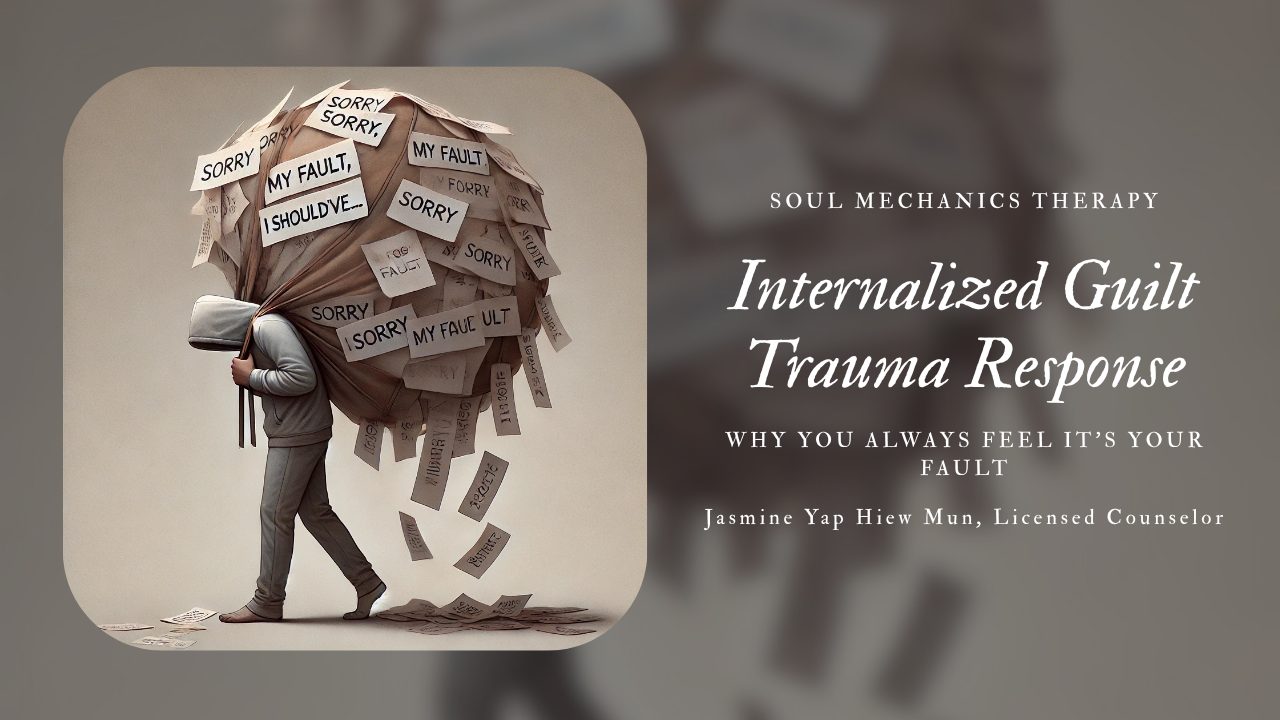
Internalized Guilt Trauma Response: Why You Blame Yourself

Written By: Jasmine Yap Hiew Mun, Licensed Counselor (KB12644),
Internalized guilt trauma response often begins quietly. Many people in Malaysia notice that when conflict happens, their first thought is, “It must be my fault.” Even small mistakes can trigger deep shame, self-criticism, or fear of disappointing others.
You might recognise thoughts like:
- “I failed again.”
- “I should have done better.”
- “Everyone must be upset because of me.”
These reactions are not simply personality traits. In trauma psychology, internalized guilt develops when someone learns early in life to carry emotional responsibility that was never meant to be theirs.
What Is an Internalized Guilt Trauma Response?
Internalized guilt happens when a person automatically blames themselves for emotional tension, even when they are not fully responsible. Many therapists understand this pattern as a trauma response shaped by emotional environments during childhood.
When caregivers struggle with stress, pressure, or emotional overwhelm, children sometimes absorb those feelings. Instead of recognizing that adults have their own challenges, the child learns:
“If someone is upset, I must have caused it.”
Over time, this belief becomes an automatic emotional reflex.
How Internalized Guilt Shows Up in Daily Life
Living with an internalized guilt trauma response can feel exhausting. People often carry emotional weight long before they realize it.
You may notice:
- Constant self-blame after disagreements
- Difficulty trusting your own judgement
- Feeling emotionally heavy around others
- Losing your voice in relationships
- People-pleasing to avoid conflict
- Struggling to identify your own emotions
These patterns are not signs of weakness. They are learned survival strategies.
Why Internalized Guilt Develops in Childhood
Many Malaysians grow up in environments that value harmony, responsibility, and emotional restraint. While these values can be meaningful, they may also create pressure for children to manage the emotional climate around them.
Children may learn to:
- stay quiet to avoid upsetting others
- apologise quickly even when unsure why
- prioritise others’ comfort over their own
The nervous system adapts by becoming hyper-attuned to emotional shifts. Later in adulthood, this can appear as chronic guilt or fear of being “the problem.”
Mental health education by the Ministry of Health Malaysia also highlights how unresolved emotional stress can influence long-term wellbeing.
Healing an Internalized Guilt Trauma Response
Healing does not require forcing yourself to stop caring about others. Instead, it involves gently learning where your responsibility begins and where it ends.
Many people start with small steps:
Differentiate Emotions
Pause and ask, “Is this truly my feeling, or am I carrying someone else’s?”
Practice Emotional Clarity
Look at situations from a wider perspective. Most conflicts involve shared responsibility.
Allow Imperfection
You are human. Mistakes do not define your worth.
Rebuild Emotional Boundaries
You are not responsible for managing everyone’s emotional world.
For some, therapy offers a supportive space to explore these patterns safely. At Soul Mechanics Therapy, we support individuals across Kuala Lumpur, Petaling Jaya, and Ipoh who struggle with persistent guilt, self-blame, and emotional overwhelm.
A Gentle Reminder
You own your emotions, not the emotions of others. Responsibility in relationships is rarely carried by one person alone.
Healing begins when you stop apologising for existing and start recognising that your emotional world deserves space too.