
High-Functioning ADHD: When You Seem Fine but Feel Constantly Exhausted
High-Functioning ADHD: When You Seem Fine but Feel Constantly Exhausted
High-Functioning ADHD
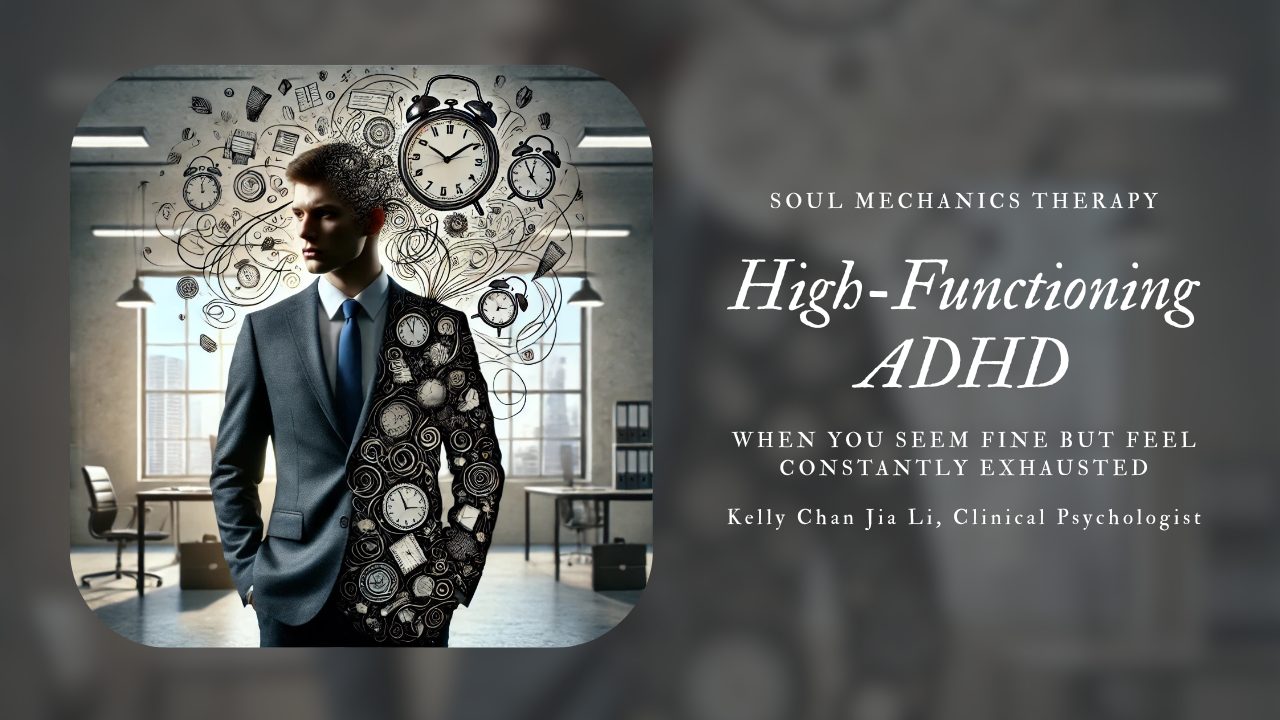
High-functioning ADHD often goes unnoticed because many adults appear capable, responsible, and successful on the outside. However, individuals living with high-functioning ADHD frequently experience daily life as mentally exhausting despite functioning well in work, relationships, or academics.
Attention-Deficit/Hyperactivity Disorder (ADHD) is commonly associated with hyperactive children. As a result, adults who manage careers, studies, or family responsibilities rarely recognise their own struggles as ADHD-related.
Yet internally, everyday functioning may require disproportionate effort. Tasks feel harder to start, focus fluctuates unpredictably, and mental fatigue builds quickly even during ordinary routines.
High-functioning ADHD is not a separate diagnosis. Instead, it describes individuals whose strengths and intelligence mask ongoing regulation difficulties. The challenge is not motivation or discipline, but how the brain regulates attention, behaviour, and energy over time.
High-Functioning ADHD as a Regulation Difference
High-functioning ADHD primarily affects executive functioning the brain systems responsible for:
- initiating tasks
- sustaining attention
- organising responsibilities
- managing time
- regulating impulses
- shifting between activities
For most people, these processes operate automatically. However, adults with ADHD often perform them consciously and repeatedly throughout the day.
Consequently, performance becomes inconsistent. Someone may excel in one situation yet struggle significantly in another despite equal effort.
Why High-Functioning ADHD Often Goes Unnoticed
Many individuals function well during childhood because structured environments provide external regulation through schedules, reminders, and supervision.
However, adulthood requires internal structure:
- managing deadlines independently
- prioritising long-term goals
- organising daily responsibilities
When external structure disappears, difficulties become more visible. Importantly, ability does not decline, environmental support simply changes.
Because they previously succeeded, many adults interpret these struggles as personal failure rather than neurological difference.
The ADHD Brain and Activation
A helpful way to understand high-functioning ADHD is through activation.
Most people start tasks because they are important.
In ADHD, engagement depends more on stimulation such as:
- urgency
- novelty
- emotional interest
- deadlines
For example, a report may feel impossible to begin for days. Yet hours before submission, focus suddenly becomes effortless.
This pattern reflects brain activation, not laziness or poor discipline.
Common Signs of High-Functioning ADHD in Adults
Difficulty Starting Tasks
Many adults describe knowing exactly what needs to be done but feeling unable to begin.
They may:
- repeatedly delay simple tasks
- mentally prepare without acting
- postpone emails or administrative work
The gap exists between intention and action.
Fluctuating Attention and Hyperfocus
Attention in ADHD is inconsistent rather than absent.
Individuals may experience:
- underfocus during routine tasks
- hyperfocus during stimulating activities
As a result, productivity appears unpredictable.
Mental Fatigue and Burnout
Because executive functions require conscious monitoring, many adults constantly remind themselves to stay organised or attentive.
Over time, this produces significant mental exhaustion even after completing ordinary tasks.
Emotional Regulation Sensitivity
High-functioning ADHD also affects emotional processing.
Common experiences include:
- strong reactions to criticism
- frustration with interruptions
- difficulty letting go of mistakes
- sensitivity to perceived rejection
These responses stem from regulation differences, not emotional weakness.
You may also notice overlaps with emotional overwhelm discussed in Why Emotional Triggers Affect Relationships.
Time Blindness
Many adults struggle to estimate time accurately.
This may lead to:
- chronic lateness
- overpacked schedules
- underestimated task duration
Repeated experiences often create guilt and confusion despite genuine effort.
How High-Functioning ADHD Affects Work and Relationships
Occupational Impact
Adults may experience:
- inconsistent productivity
- deadline dependence
- avoidance of administrative tasks
- burnout from compensating effort
Relationship Impact
Partners or colleagues may misinterpret ADHD behaviours as lack of care when they actually reflect regulation difficulty.
Examples include:
- delayed replies
- forgotten commitments
- emotional reactivity
Support Strategies for High-Functioning ADHD
Externalize Information
Instead of relying on memory, use:
- written task lists
- alarms
- visual planners
- structured calendars
External systems reduce cognitive strain.
Reduce Starting Barriers
Breaking tasks into extremely small steps lowers activation resistance.
For example:
- open document
- write one sentence
- work for five minutes
Momentum typically follows action.
Use Time-Limited Work Sessions
Short focused intervals with breaks improve sustainability and prevent overload.
Address Emotional Barriers
Procrastination often connects to emotional discomfort such as fear of mistakes or overwhelm. Addressing emotions reduces avoidance.
When Professional Support Helps
If high-functioning ADHD begins affecting work performance, emotional wellbeing, or relationships, professional support may help clarify underlying patterns.
Assessment and therapy can include:
- ADHD psychological assessment
- executive functioning strategies
- emotional regulation support
- structured behavioural interventions
You may also explore guidance from mental health resources provided by Ministry of Health Malaysia.
If attention difficulties relate to anxiety or burnout, you may find helpful insights in Stress vs Anxiety: Understanding the Difference.
Reframing High-Functioning ADHD
Understanding high-functioning ADHD shifts the narrative from:
“I am inconsistent or lazy”
to
“My brain regulates attention differently.”
Recognition reduces self-blame and allows strategies that align with neurological functioning rather than constant self-pressure.
A Gentle Reflection
High-functioning ADHD often describes capable individuals carrying invisible effort every day.
The goal is not lowering expectations but improving sustainability.
With understanding, structured support, and appropriate intervention, many adults maintain their strengths while reducing exhaustion and chronic self-criticism.
常见问题(FAQ)
High-functioning ADHD refers to individuals who appear capable externally but experience significant internal difficulty regulating attention, time, and emotions.
Yes. Many adults remain undiagnosed because academic or career success masks executive functioning challenges.
Although not a formal diagnosis, clinicians commonly use the term to describe masked ADHD presentations.
Assessment is helpful when chronic procrastination, exhaustion, emotional dysregulation, or time management difficulties affect daily functioning.

Written By: Kelly Chan Jia Li, Clinical Psychologist (MAHPC(CP)00353)
This article was prepared by Ms Kelly Chan Jia Li, Registered Clinical Psychologist and full member of the Malaysian Society of Clinical Psychology.
Ms Kelly works with adolescents and adults experiencing ADHD, anxiety, trauma-related concerns, emotional regulation difficulties, and relationship challenges. Using evidence-based approaches such as Cognitive Behavioral Therapy (CBT), Acceptance and Commitment Therapy (ACT), and Trauma-Focused interventions, she helps individuals better understand how neurodevelopmental differences affect daily functioning, self-confidence, and emotional wellbeing.
Her clinical work focuses on helping clients move from chronic self-criticism and exhaustion toward sustainable functioning and self-understanding.