
ADHD and Anxiety at Work: Why Tasks Feel Harder Than They Should
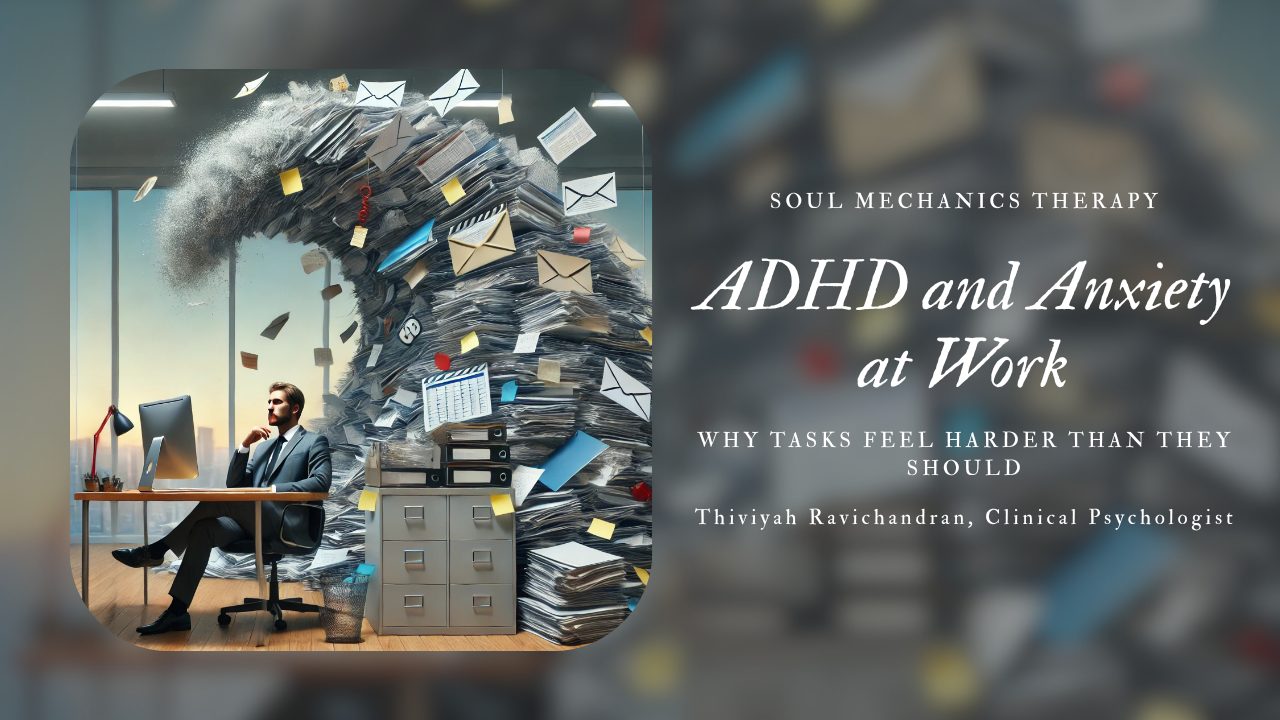
ADHD and Anxiety at Work: Why Tasks Feel Harder Than They Should
Many adults experiencing ADHD and anxiety at work often wonder why simple tasks feel unusually exhausting despite being capable and motivated. You may sit at your desk knowing exactly what needs to be done, yet struggle to begin. At other times, you may repeatedly check your work out of fear of making mistakes.
These experiences are not laziness or poor discipline. Instead, they often reflect how Attention-Deficit/Hyperactivity Disorder (ADHD) and anxiety influence attention, emotional regulation, and workplace performance.
Understanding how ADHD and anxiety interact can help reduce self-blame and allow you to build work strategies that support how your brain actually functions.
How ADHD Affects Workplace Performance
ADHD primarily affects executive functioning — the brain processes responsible for planning, organisation, time management, and task initiation.
At work, ADHD may appear as:
- Difficulty starting tasks despite good intentions
- Forgetting deadlines or appointments
- Switching between unfinished tasks
- Losing track of time during projects
- Feeling mentally overwhelmed by administrative work
Importantly, ADHD also brings strengths. Many individuals experience hyperfocus, allowing deep concentration on meaningful or stimulating work. This can enhance creativity, innovation, and problem-solving abilities.
However, inconsistent attention regulation often leads others — and sometimes the individual themselves — to misunderstand ADHD as lack of effort.
How Anxiety Affects Work Performance
While ADHD impacts attention regulation, anxiety affects emotional safety and decision-making.
Workplace anxiety commonly includes:
- Overthinking emails or conversations
- Fear of making mistakes
- Perfectionism and excessive checking
- Difficulty relaxing after work hours
- Physical tension before meetings or presentations
According to mental health guidance shared by the Ministry of Health Malaysia, prolonged stress and anxiety can significantly affect concentration, sleep quality, and emotional wellbeing.
Although mild anxiety may temporarily increase alertness, chronic anxiety reduces productivity, creativity, and confidence over time.
When ADHD and Anxiety Occur Together
Many professionals experience both ADHD and anxiety simultaneously.
This overlap often creates a difficult cycle:
- ADHD makes task initiation challenging.
- Deadlines approach unexpectedly.
- Anxiety increases self-criticism and worry.
- Stress further reduces focus.
Consequently, individuals may feel constantly behind despite working extremely hard.
This pattern frequently results in:
- burnout,
- emotional exhaustion,
- reduced confidence,
- workplace self-doubt.
Importantly, these struggles do not reflect intelligence or capability. They reflect neurological and emotional regulation differences.
Signs ADHD and Anxiety May Be Affecting Your Work
You may notice:
- Starting tasks feels mentally blocked
- Productivity depends heavily on deadlines
- Small mistakes trigger strong worry
- You feel exhausted after normal workdays
- You procrastinate yet feel constantly stressed
- Rest feels difficult even after work
If these experiences sound familiar, understanding the interaction between ADHD and anxiety becomes the first step toward sustainable change.
Practical Strategies for Managing ADHD and Anxiety at Work
Externalise Memory and Organisation
Use planners, digital reminders, or visual task boards instead of relying on memory alone. External systems reduce mental overload.
Break Tasks Into Smaller Actions
Large tasks activate avoidance. Starting with extremely small steps (e.g., opening a file or writing one sentence) helps initiate momentum.
Create Predictable Work Routines
Short pre-work rituals — such as breathing exercises or structured planning — signal the brain to transition into focus mode.
Schedule Intentional Breaks
Productivity improves when rest is planned. Short breaks prevent cognitive fatigue common in ADHD and anxiety.
Address Emotional Barriers
Sometimes procrastination reflects fear rather than poor time management. Learning emotional regulation skills reduces avoidance patterns.
You may also find it helpful to explore our related guide on Anxiety Morning Rituals to support emotional regulation throughout the workday.
When Professional Support Can Help
If ADHD and anxiety begin affecting job performance, confidence, or relationships at work, professional support can help identify personalised coping strategies.
Therapy may support:
- attention regulation,
- emotional resilience,
- workplace stress management,
- burnout prevention,
- confidence rebuilding.
At Soul Mechanics Therapy, individuals in Kuala Lumpur, Petaling Jaya, and Ipoh receive evidence-based psychological support tailored to workplace and emotional challenges.
A Compassionate Perspective
Many adults living with ADHD and anxiety describe feeling “not good enough” despite consistent effort. However, productivity struggles do not define your worth.
When you understand how your brain regulates attention and stress, work becomes less about forcing discipline and more about creating supportive systems.
Growth begins not with perfection, but with curiosity and self-understanding.
常见问题(FAQ)
Yes. ADHD affects focus and organisation, while anxiety impacts confidence and decision-making, making workplace tasks feel more mentally demanding.
ADHD affects task initiation, while anxiety increases fear of mistakes. Together, they can create avoidance despite strong motivation.
Many adults who struggle with productivity despite appearing capable may also relate to experiences described as high-functioning ADHD, where challenges remain hidden behind achievement and responsibility.
Yes. Therapy helps individuals develop regulation strategies, improve productivity habits, and manage workplace stress sustainably.

Written By: Thiviyah Ravichandran, Clinical Psychologist (MAHPC(CP)00620)
This article was written by Thiviyah Ravichandran, Registered Clinical Psychologist (MAHPC(CP)00620), who works with adults experiencing ADHD, anxiety, emotional regulation difficulties, and workplace stress using evidence-based psychological approaches.