
Emotional Cheating in Relationships: Signs, Causes & Healing
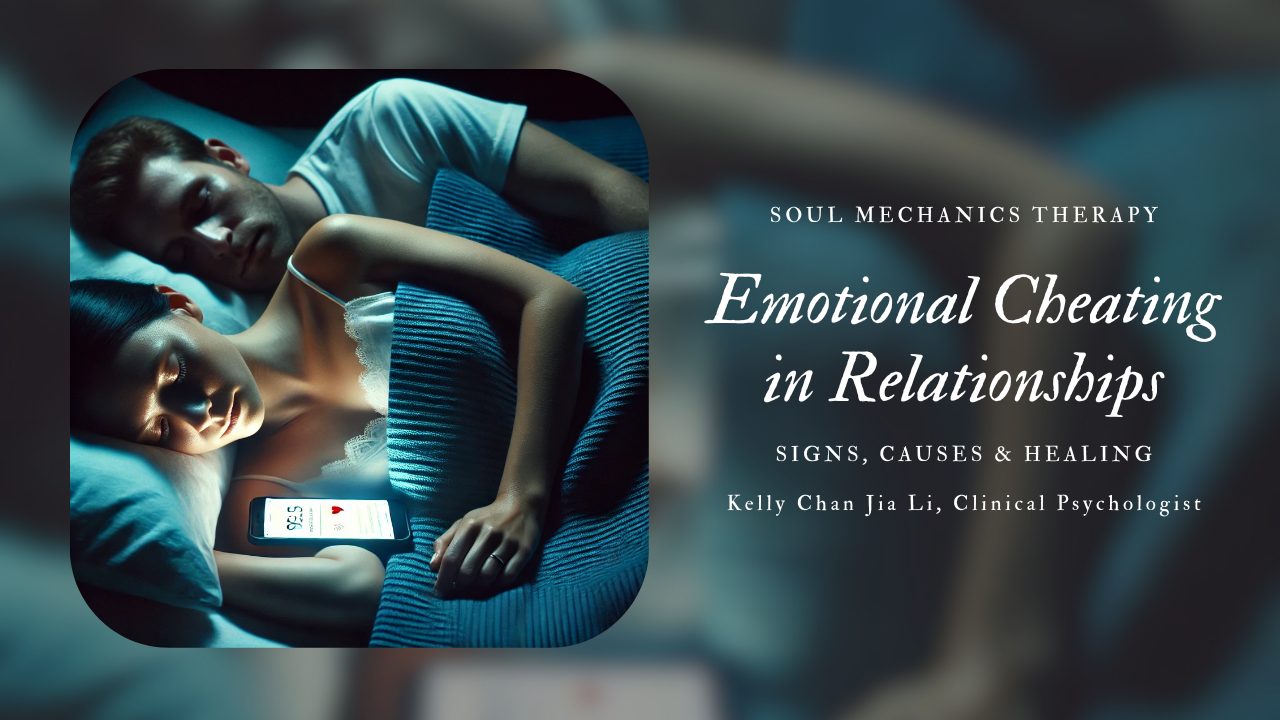
Emotional Cheating in Relationships: Signs, Causes & Healing

Written By: Kelly Chan Jia Li, Clinical Psychologist (MAHPC(CP)00353),
Emotional Cheating in Relationships: When Loyalty Crosses a Hidden Line
Emotional cheating in relationships is often misunderstood because it does not involve physical intimacy. Many people believe cheating only happens when physical boundaries are crossed, yet emotional betrayal can feel just as painful. When someone begins sharing deep emotional vulnerability, secrecy, or validation with another person outside the relationship, trust can slowly erode even if nothing physical happens.
In today’s digital world, emotional closeness can develop quietly through messaging, late-night conversations, or shared personal struggles. Because of this, many couples only recognize emotional cheating after emotional distance has already grown.
If emotional reactions or unmet needs feel familiar, you may also relate to how emotional triggers shape relationships.
What Is Emotional Cheating?
Emotional cheating happens when a partner forms an emotionally intimate bond with someone else that crosses agreed-upon boundaries. It usually begins harmlessly shared jokes, supportive conversations, or venting about stress. Over time, however, the connection becomes secretive or emotionally exclusive.
For example, someone may confide deeply in a coworker while slowly withdrawing from their partner. Even when the intention feels innocent, emotional dependency outside the relationship can create hidden distance at home.
Signs of Emotional Cheating in Relationships
Recognising emotional cheating can feel confusing because it often looks like friendship at first. However, certain patterns may signal that boundaries are shifting:
- Sharing personal feelings with someone else more than with your partner
- Hiding conversations or becoming secretive about messages
- Turning to someone else first for emotional support
- Comparing your partner to another person
- Feeling emotionally energised by someone outside the relationship
- Becoming defensive when asked about a “friend”
Instead of focusing only on behaviour, it helps to notice how the connection affects emotional safety between partners.
Emotional Cheating vs Friendship: What’s the Difference?
Healthy friendships continue to exist within committed relationships. However, emotional cheating usually involves secrecy or emotional withdrawal from the partner.
Ask yourself:
- Would I feel uncomfortable if my partner read these conversations?
- Am I sharing emotional struggles here instead of with my partner?
- Am I emotionally relying on this person more than my relationship?
If the answer is yes, the connection may be crossing into emotional territory that threatens intimacy.
Why Emotional Cheating Happens
Emotional cheating rarely begins with harmful intent. Instead, it often develops when emotional needs go unnoticed or unspoken.
Unmet Emotional Needs
When partners feel unheard or disconnected, emotional validation elsewhere may feel comforting. Over time, however, that comfort creates emotional distance at home.
The Excitement of Novelty
Long-term relationships naturally settle into routines. Meanwhile, new connections can feel refreshing and emotionally stimulating, which may blur boundaries.
Avoiding Difficult Conversations
Sometimes it feels easier to seek understanding from someone outside the relationship rather than addressing conflict directly. Unfortunately, avoidance often deepens emotional gaps.
Lack of Awareness
Some individuals genuinely do not recognise the shift into emotional cheating until trust has already been affected.
If emotional disconnection feels familiar, you may also find insight in our article on relationship anxiety and emotional distance.
Is Emotional Cheating as Hurtful as Physical Cheating?
For many people, emotional betrayal cuts deeper than physical infidelity. Emotional cheating involves trust, vulnerability, and intimacy; the very foundation of a relationship.
When emotional energy moves elsewhere, partners may feel:
- Rejected
- Insecure
- Angry
- Confused about what counts as betrayal
Because emotional safety is essential to attachment, rebuilding trust often requires patience and honest dialogue.
What To Do If You Suspect Emotional Cheating
Open Communication First
Rather than accusing, approach the conversation with curiosity:
“I’ve been feeling distant lately, and I notice you seem emotionally close to someone else. Can we talk about it?”
This approach invites dialogue instead of defensiveness.
Set Emotional Boundaries Together
Healthy boundaries are mutual agreements, not punishments. For example, couples may decide that emotional venting should happen within the relationship first.
Reflect on Relationship Dynamics
Before reacting, consider:
- Have we been emotionally connected lately?
- Are our needs being expressed openly?
- Has stress reduced our closeness?
Sometimes emotional cheating reflects a deeper need for reconnection rather than intentional betrayal.
Consider Couples Therapy
Therapy provides a structured, safe environment for rebuilding trust. Resources like the Malaysian Mental Health Association also highlight how professional support strengthens emotional communication.
If You Realise You Are Emotionally Cheating
Practice Honest Self-Reflection
Ask yourself what emotional need this connection is fulfilling. Awareness is the first step toward repair.
Decide What You Truly Want
Clarify whether you are committed to repairing the relationship or emotionally moving away. Honest clarity prevents further hurt.
Take Responsibility Without Minimising
Statements like “Nothing physical happened” may invalidate your partner’s feelings. Instead, acknowledge the emotional impact openly.
Reset Boundaries with the Third Person
Rebuilding trust may require limiting or redefining contact. Transparency and consistency are essential here.
Rebuild Trust Through Action
Trust grows through daily behavior emotional check-ins, openness, and consistent effort.
Preventing Emotional Cheating in Relationships
Regular conversations about feelings, dreams, and struggles help maintain intimacy. Small daily check-ins can prevent emotional distance from growing.
Define Boundaries Early
Each relationship has different comfort levels. Discuss expectations openly so both partners understand what feels safe.
Communicate Needs Directly
If loneliness or disconnection appears, address it within the relationship rather than seeking fulfilment elsewhere.
Create Rituals of Connection
Simple habits shared meals, device-free conversations, or weekly check-ins strengthen emotional security.
Seek Support Early
Professional support can help couples rebuild communication before disconnection turns into emotional betrayal.
Emotional Cheating Is Real And It Matters
Emotional cheating is not defined only by physical actions. It is about where emotional energy, trust, and vulnerability are invested. Relationships thrive when both partners feel emotionally chosen, emotionally safe, and emotionally valued.
Being mindful of emotional boundaries protects not only loyalty but also the deeper intimacy that keeps relationships strong.